For many firearm owners, concealed carry while driving presents a completely different challenge compared to everyday carry. What works well while standing or walking doesn’t always translate to comfort, accessibility, or safety once you’re seated behind the wheel.
If you’ve ever struggled to access your firearm while buckled in, you’re not alone. Understanding the differences between waist carry and vehicle-mounted carry is key to choosing the safest and most practical setup for concealed carry while driving.
Why Concealed Carry While Driving Feels Different
When you’re seated in a vehicle, your body position changes significantly. Your hips are bent, your torso is restricted, and your seatbelt creates an additional barrier.
These factors can make concealed carry while driving more difficult than expected.
Common challenges include:
- Seatbelt blocking access to your firearm
- Limited range of motion while seated
- Slower draw times from traditional holster positions
- Increased discomfort during long drives
Because of these limitations, many gun owners begin exploring alternative methods for concealed carry while drivingthat improve accessibility without sacrificing safety.
Waist Carry While Driving
Waist carry — typically inside-the-waistband (IWB) or appendix carry — is one of the most common everyday carry methods.
Pros of Waist Carry
- No additional equipment required
- Familiar carry method
- Easy transition when exiting the vehicle
Cons of Waist Carry While Driving
While effective outside the vehicle, waist carry can become problematic for concealed carry while driving.
- Seatbelt interference can block your draw
- Drawing while seated can be awkward or slow
- Extended sitting can cause discomfort or pressure points
In many real-world scenarios, accessing a firearm from a waist holster while driving is not as efficient as it is while standing.
Vehicle Holster Carry
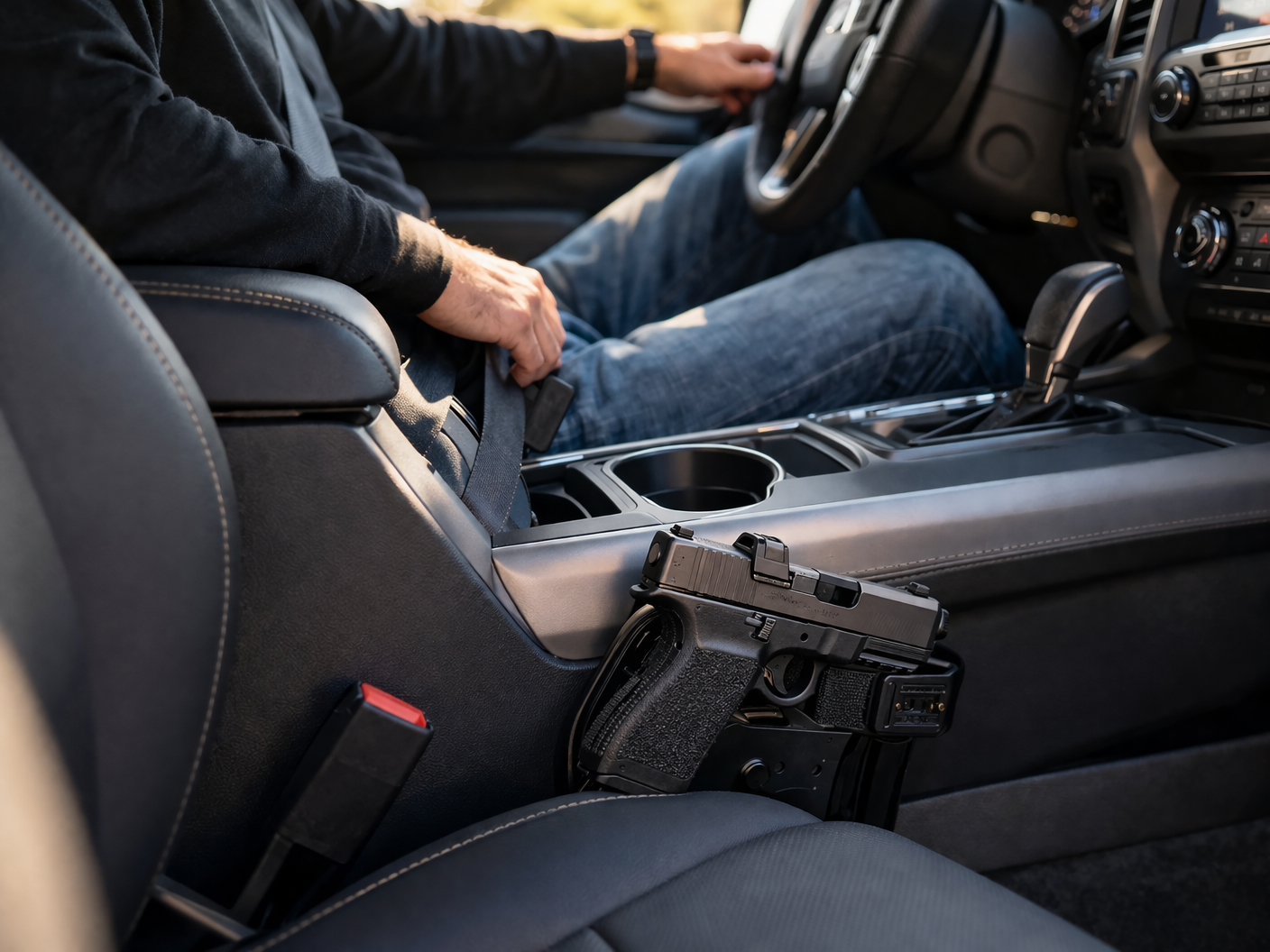
Vehicle-mounted holsters are designed specifically to improve concealed carry while driving by repositioning the firearm into a more accessible location.
Instead of being blocked by your seatbelt or clothing, the firearm is mounted beside the seat or center console.
Pros of Vehicle Holsters
- Faster and more natural draw while seated
- Reduced interference from seatbelts
- More comfortable for long drives
- Consistent firearm positioning
A dedicated system like a vehicle holster mount allows drivers to keep their firearm secure and accessible at all times.
You can explore a vehicle-mounted option here:
https://highwayholster.com
Which Is Better for Concealed Carry While Driving?
There isn’t a one-size-fits-all answer, but for many drivers, vehicle-mounted carry provides a significant advantage.
When comparing both methods for concealed carry while driving, vehicle holsters often win in terms of accessibility and comfort.
Waist carry may still be preferred for:
- Short trips
- Quick transitions in and out of the vehicle
- Minimal setup
Vehicle holsters are often preferred for:
- Long commutes
- Road trips
- Drivers who prioritize accessibility
If you’re frequently in your vehicle, upgrading your setup for concealed carry while driving can make a noticeable difference.
Safety Considerations
No matter which method you choose, safety should always come first when practicing concealed carry while driving.
Key safety tips include:
- Always use a holster that fully covers the trigger guard
- Avoid placing firearms loosely in the vehicle
- Ensure the firearm is secure and does not shift during movement
- Keep the firearm out of reach of unauthorized passengers
Proper positioning is critical to both safety and accessibility.
Legal Considerations
Firearm laws vary depending on your state, so understanding local regulations is essential for concealed carry while driving.
For example:
Florida concealed carry laws allow certain forms of vehicle carry for lawful firearm owners.
Texas concealed carry laws allow firearm possession in vehicles under specific conditions.
Before choosing your setup, it’s important to verify your local laws.
You can explore professional training and legal guidance through USCCA here:
https://www.usconcealedcarry.com
Choosing the Right Setup for Your Vehicle
The best setup for concealed carry while driving depends on your personal preferences and daily habits.
Consider:
- How often you drive
- Your firearm type
- Your holster compatibility
- Your comfort level with different draw positions
Many drivers choose a hybrid approach — using waist carry outside the vehicle and a mounted holster while driving.
If you’re using a mounted system, it’s also helpful to ensure compatibility with your holster setup.
Additional Resources for Better Carry
If you’re continuing to refine your setup for concealed carry while driving, you may find these resources helpful:
Best holster for road trips
Car holster safety tips
These guides can help you optimize both comfort and safety for longer drives.
Final Thoughts
Choosing between waist carry and vehicle-mounted carry ultimately comes down to how you prioritize accessibility, comfort, and safety.
For many firearm owners, upgrading their setup for concealed carry while driving leads to faster access and a more comfortable driving experience.
Vehicle holster systems offer a purpose-built solution designed specifically for drivers, while waist carry remains a reliable everyday option outside the vehicle.
If you spend a significant amount of time behind the wheel, evaluating your approach to concealed carry while drivingis one of the smartest upgrades you can make.